How Many Grams Are in a Cup of Cocoa Powder?
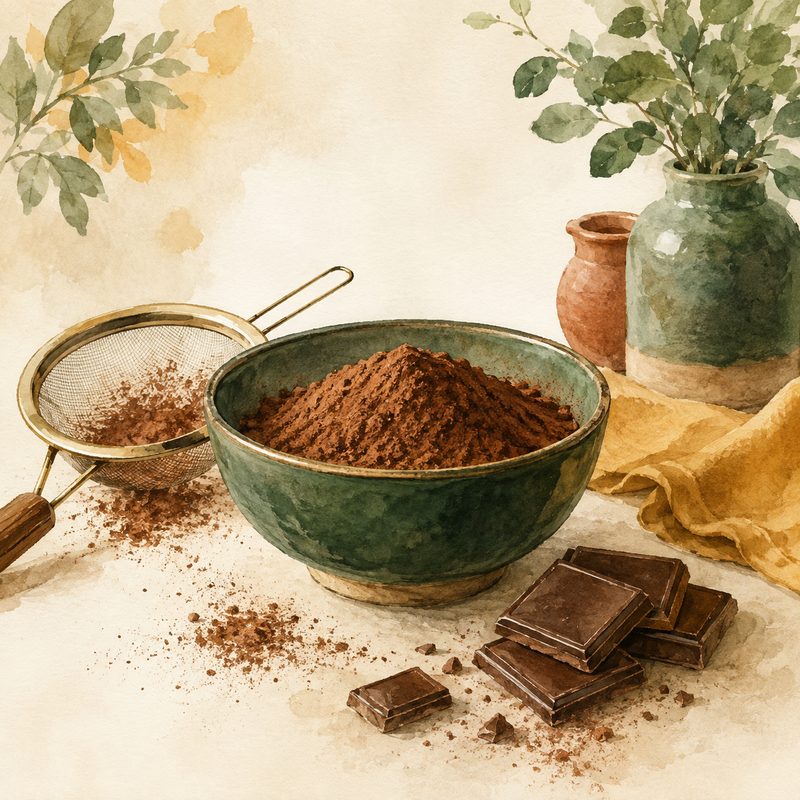
A cup of unsweetened cocoa powder weighs about 100 g — a density close to half that of water, which makes it one of the lightest dry ingredients in a recipe.
The math
Cocoa powder has a density of about 0.40. For a 250 ml cup:
250 ml × 0.40 = 100 g
That's almost as light as oats, and half the weight of flour by volume — which makes sense, since cocoa is made of extremely fine particles that trap a lot of air once poured into a cup.
Dutch-process vs. natural cocoa
Two types of cocoa powder show up often in American recipes: natural cocoa, more acidic and lighter in color, and Dutch-process cocoa, alkalized to be darker and milder-tasting. Both weigh practically the same per cup — the difference is in the chemistry, not the density. That matters for how a cake rises: natural cocoa reacts with baking soda, while the less acidic Dutch-process cocoa needs baking powder to rise properly. A recipe that specifies one or the other does so for that reason, not for weight.
Why cocoa clumps
Cocoa's very fine particles, combined with a bit of residual fat (cocoa butter), tend to stick together into small clumps, especially after sitting in the pantry. Sifting cocoa before folding it in — ideally along with the flour and sugar — prevents these clumps and ensures it's evenly distributed through the batter.
Quick reference
- 1 cup = 100 g
- ¾ cup = 75 g
- ½ cup = 50 g
- ¼ cup = 25 g
- 1 tbsp ≈ 6 g
For a frosting or ganache where the chocolate flavor needs to dominate, weighing the cocoa is better than measuring by volume — a small weight variation shows up immediately in how intense the flavor tastes.
Swapping part of the flour for cocoa
Many chocolate cake recipes start from a plain cake recipe with part of the flour replaced by cocoa. If you make that substitution yourself, do it by volume, not by weight: ¼ cup of flour removed (31 g) against ¼ cup of cocoa added (25 g). The batter loses a few grams of dry matter, but cocoa, which is very absorbent, makes up for it by capturing moisture — replacing 31 g of flour with 31 g of cocoa would instead give a drier, more bitter cake, because the cocoa then takes up far more volume than the flour it replaces.
Beyond roughly a quarter of the flour swapped for cocoa, the cake's structure starts to suffer: cocoa has no gluten and doesn't contribute to holding the crumb together.
Blooming the cocoa
A common step in American brownie and chocolate cake recipes: mixing the cocoa with a hot liquid (coffee, water, milk) before folding it into the batter. This blooming dissolves the cocoa particles and releases the aromas, for a noticeably deeper chocolate flavor from the same amount. Since cocoa absorbs liquid, measure it before wetting it — never after; the volume and weight of a wet cocoa paste have nothing to do with the 100 g per cup of the dry powder.
Cocoa powder vs. unsweetened chocolate
Some recipes let you substitute one for the other: 3 tablespoons of cocoa powder plus 1 tablespoon of fat (butter or melted oil) replace about 30 g of unsweetened baking chocolate. This classic substitution works well in a pinch if a recipe calls for baking chocolate you don't have on hand, but it slightly changes the final texture — a bit less rich, a bit drier.
Don't confuse it with instant hot chocolate mix
The hot chocolate mix sold at the grocery store already contains sugar, milk powder, and sometimes thickeners — its density and flavor have nothing to do with unsweetened cocoa powder used in baking. Always check that the label says "100% cocoa" or "unsweetened" before using it in a cake or cookie recipe, or the result will be far too sweet with a texture that's off.
One detail worth watching on the label: some cocoas sold as "premium" or "extra dark" have a slightly different fat content, which can nudge their weight per cup very slightly — not enough to change the reference points above for everyday use.
Cocoa, flour, sugar, and eight other ingredients are gathered with their cup fractions in the complete conversion chart.