How Many Grams Are in a Cup of Rice (Raw and Cooked)?
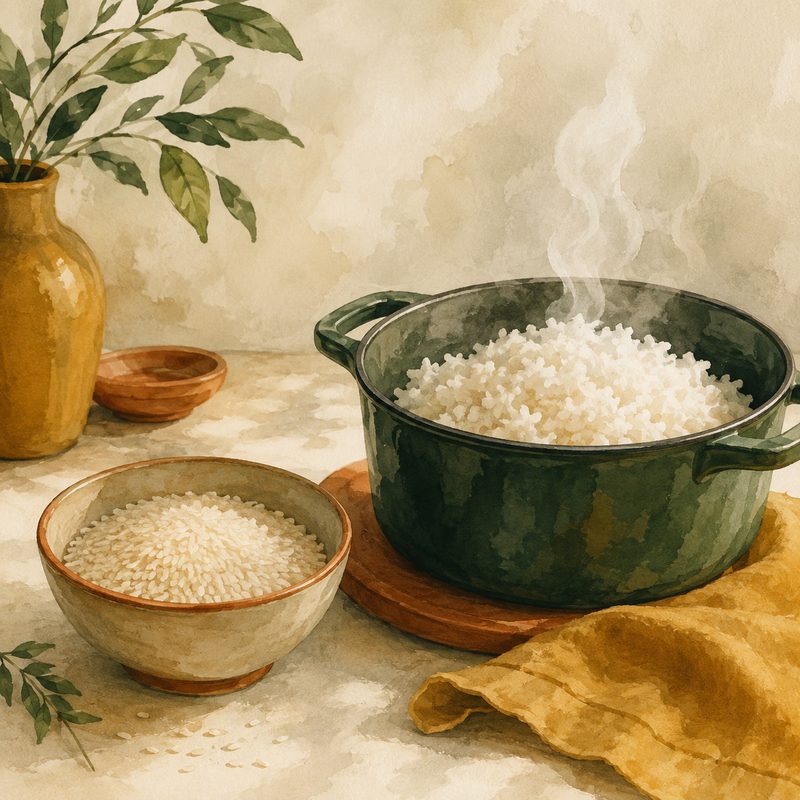
A cup (250 ml) of raw rice weighs about 195 g. Once cooked, rice absorbs water and swells, so its weight per cup changes — expect somewhere between 175 and 200 g depending on the variety and how well done it is.
Raw rice: a simple calculation
Raw rice has a fairly predictable density of about 0.78. For a 250 ml cup:
250 ml × 0.78 ≈ 195 g
This figure holds up regardless of variety — basmati, jasmine, short-grain — because raw, dry, hard grains all behave fairly similarly once poured into a measuring cup.
Cooked rice: why the number is less precise
Once rice cooks, everything changes. Each grain absorbs water and swells, so one cup of raw rice yields about 3 cups of cooked rice once the water is worked in. But that ratio varies by variety — elongated, less sticky basmati doesn't swell exactly like a stickier short-grain rice — and by cooking method: rice left slightly al dente won't weigh the same as rice cooked through and fully absorbed. So it's impossible to give a figure for cooked rice as reliable as the one for raw rice.
What to do if a recipe calls for cooked rice by the cup
If precision matters — for a sushi recipe or a dish where texture is critical — weigh the cooked rice directly on a scale rather than relying on a generic number. For more general use (a side dish, fried rice), the reference points below are plenty.
Quick reference
- 1 cup raw rice = 195 g
- ½ cup raw rice = 98 g
- ¼ cup raw rice = 49 g
- 1 cup raw rice, cooked ≈ 3 cups cooked rice (about 175-200 g per cooked cup)
The site's converter uses the density of raw rice, the more reliable of the two — for cooked rice, a scale remains your best ally. One cooking tip while we're at it: the classic ratio is 1 cup of rice to 2 cups of water (white, long-grain), a ratio to adjust slightly depending on the variety and the rice cooker used.
How much rice per person
The most common guideline for a side dish: between ¼ and ⅓ cup of raw rice per person, or 50 to 65 g, which yields about one cup of cooked rice on the plate. For a dish where rice is the base — fried rice, pilaf, a grain bowl — count on ½ cup raw (100 g) per person instead. One cup of raw rice (195 g) therefore feeds three to four people as a side, two as a main. These are orders of magnitude: they mainly let you check that a recipe "for 6" calling for 3 cups of raw rice makes sense, and that a recipe "for 2" with the same amount doesn't.
The rice cooker's measuring cup isn't a cup
Electric rice cookers come with a small graduated cup that doesn't match the North American measuring cup: it's noticeably smaller. The lines inside the pot are calibrated for that cup, not for a 250 ml cup. If you follow a recipe written in cups with a rice cooker, measure with a real measuring cup and add water per the recipe, or use the supplied cup for both the rice and the water to keep the appliance's ratio. Mixing the two systems is the most common cause of rice that's too dry or too mushy.
White rice vs. brown rice
Brown (whole grain) rice keeps its more fibrous bran layer, giving it a slightly different texture than polished white rice. Its actual density varies a bit from white rice, but the difference stays small for everyday use — the reference points above give a good approximation for both, with the best accuracy for long-grain white rice, the most documented variety.
Rinse the rice after weighing, not before
If your recipe calls for rinsing rice before cooking to remove excess starch, do it after measuring the raw quantity, not before: rinsed rice retains some water on its surface, which would throw off the weight slightly if you weighed it wet. Drain well before moving on to cooking.
One last useful note: rice swells differently depending on whether it's cooked on the stovetop, in a pressure cooker, or in an electric rice cooker — the latter generally lets less water evaporate, resulting in slightly heavier cooked rice per cup.
Every equivalent on the site, rice included, is grouped in the US to metric cooking conversion chart.