How Much Does a Packed Cup of Brown Sugar Weigh?
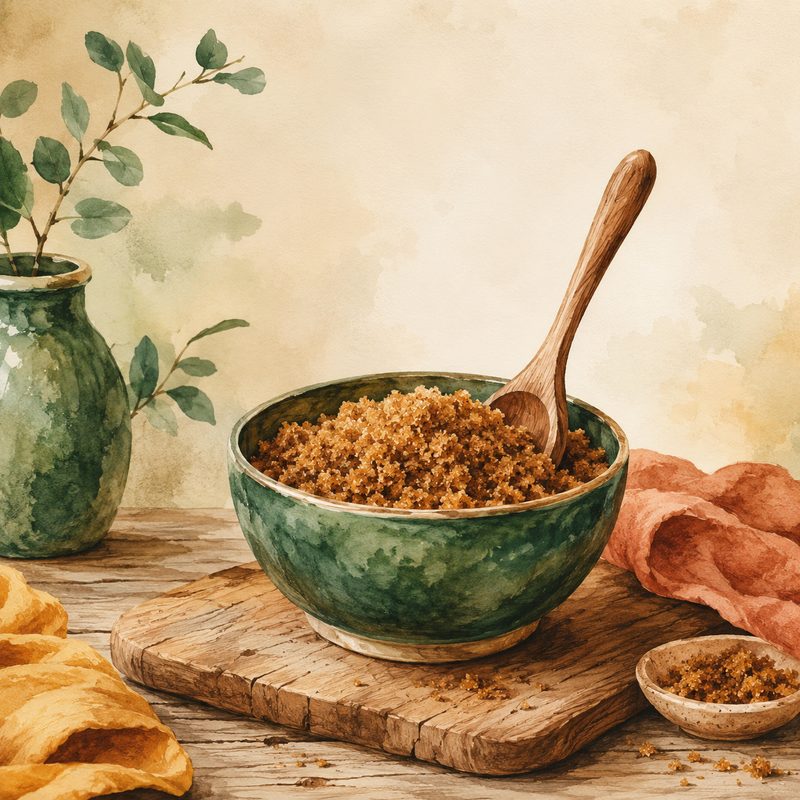
A cup of firmly packed brown sugar weighs about 220 g. Without packing it, the same cup can weigh as little as 150 g — that's the entire difference between following a recipe and ruining it.
Why "packed" changes everything
A recipe that specifies "1 cup packed brown sugar" expects you to press the sugar firmly into the cup, layer by layer, until it holds the shape of the container once turned out. Thanks to the molasses coating each crystal, brown sugar sticks together and compacts easily — without that packing, it holds much more air and weighs up to 30% less for the same apparent volume. That's why nearly every American recipe assumes packed brown sugar by default, unless explicitly stated otherwise.
Light brown sugar vs. dark brown sugar
The difference between light brown sugar and dark brown sugar comes down to how much molasses is added — the more there is, the deeper the color and flavor. This difference affects taste and moisture a bit, but not really weight: both are measured using the same 220 g per packed cup reference. So you can apply the figures below regardless of the shade of your brown sugar.
How to pack it properly
Add the brown sugar to the cup in small amounts, pressing firmly with the back of a spoon after each addition, until the cup is full and compact. Level off the excess with a knife. The classic test: turned out with a sharp flip, the sugar should hold the shape of the cup for a few seconds before collapsing.
Quick reference
- 1 packed cup = 220 g
- ¾ packed cup = 165 g
- ½ packed cup = 110 g
- ¼ packed cup = 55 g
- 1 unpacked cup ≈ 145-160 g (less reliable, best avoided if the recipe specifies "packed")
If a recipe doesn't specify "packed" or "unpacked" for brown sugar, pack it anyway — that's the default convention in nearly all North American recipes, and when in doubt, it's better to err on the side of packing than not.
"Brown sugar" doesn't mean the same thing everywhere
In the US and Canada, brown sugar is refined white sugar with molasses added back in: moist, packable, hardens when exposed to air. In France, the word "cassonade" often refers to a dry-crystal raw cane sugar — a different product that doesn't pack and doesn't weigh 220 g per cup. If you're following an American recipe from France, look for "sucre brun" or "vergeoise" instead, whose moist texture is closer to American brown sugar. Turbinado, demerara, or granulated maple sugar, with their large dry crystals, aren't direct substitutes either: their weight per cup is closer to white sugar's and they don't bring the same moisture.
Replacing brown sugar with white sugar: what changes
Weight for weight, white sugar can replace brown sugar without breaking a recipe, but the result isn't identical. The molasses in brown sugar brings moisture and a slight acidity: brown sugar cookies are softer and chewier, white sugar cookies crisper and paler. A cake also loses its caramel notes. In the other direction, swapping white sugar for brown makes the batter a bit moister and darker — harmless in a muffin, but to be avoided in a meringue or a sponge cake, where white sugar plays a structural role.
To convert by volume rather than by weight, remember that packed brown sugar is heavier: 1 cup of brown sugar (220 g) weighs 20 g more than 1 cup of white sugar (200 g). A handy reference for small amounts: 1 tbsp of packed brown sugar ≈ 13 g.
No brown sugar on hand? The homemade method
You can recreate brown sugar with white sugar and molasses: use about 1 tablespoon of molasses per cup of white sugar for a light brown sugar, and 2 tablespoons for a darker version. Mix with a fork until the molasses is evenly distributed, then pack normally to measure — the resulting weight comes close to the usual 220 g per cup.
Why it hardens in the pantry
Brown sugar hardens when its moisture escapes into open air, causing the crystals to fuse back together. Stored in an airtight container, with a slice of apple or a piece of bread to maintain ambient humidity, it stays soft much longer. Hardened brown sugar doesn't weigh any differently once softened again — only packing it for measurement becomes harder until it regains its soft texture.
One last note: if a recipe lists brown sugar in grams rather than cups, that's often a sign it comes from a source that weighs its ingredients systematically — a good marker of precision worth favoring when you have a choice between several versions of the same recipe.
Unpacked brown sugar is one of the most common baking conversion mistakes, alongside packed flour and confused ounces — that article explains how to spot each one in a failed recipe.